|
Installation |
Installation Procedures
- Check each wall with a carpenters level. Square and true up any surfaces out of plumb with shim material. A true surface will make your installation easier and better looking.
- Do a measurements take-off and prepare a layout.
- Determine how many full sheets and partial sheets will fill out the area.
- Determine the most economical cuts to prevent waste. Use partial sheets as end fillers where possible.
- Spaces remaining at each end of the wall may be completed by : cutting a patterned sheet to fit and simply mudding over the last cut pattern, or, by cutting a filler piece from 5/8" gypsum wallboard.
- Use a sharp drywall knife and make repeated cuts on the face of the sheet. Break from back and cut to separate. (Handle our product with care. The reduced sheet thickness in the debossed areas is subject to damage if the sheets are flexed. Carry sheets vertically rather than flat.)
- Use a small drywall saw to cut holes for switches, outlets, etc.
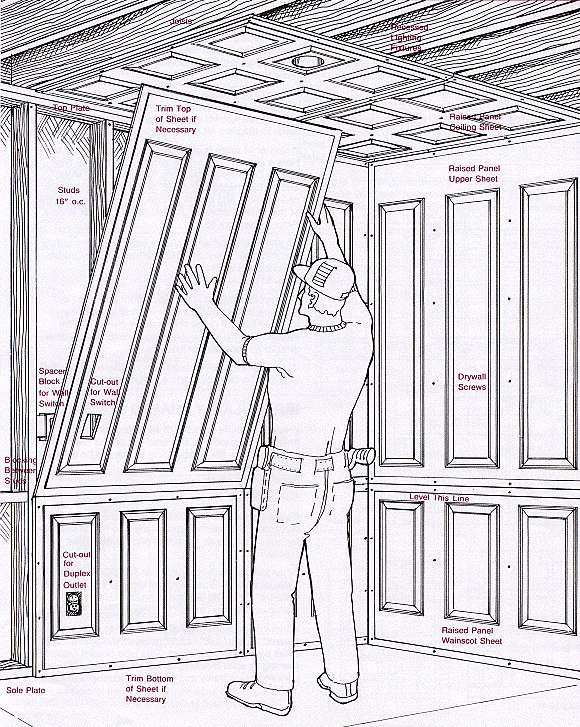
- Carefully position the first full sheet according to your layout and fasten in place. Use drywall screws rather than nails to minimize patching.
- Continue installation of adjoining sheets by aligning debossed pattern with the debossing on the previous sheets. Small corrections may be necessary due to slight manufacturing variations in the width of each sheet and in the pattern in to edge distance. *Note: Maintain 4" width between edges of embossed pattern. Click here to see the joint detail example of embossed pattern in Adobe PDF.
- Add the remaining filler pieces to complete the surface.
- Proceed with taping and filling joints. Use conventional 2" wide paper tape. Press this deep into the compound with a 2" knife to prevent its extending beyond the recessed edges.
- Use a 3 1/2" to 4" wide knife to fill the joint. The number of coats to finish may vary. Best results have been achieved with read mix joint compound. Clean up any spillover while still wet.
- Lightly sand to feather all joints.
Finishing/Painting
The installed sheets should be primed with a quality sealer. Touch up with spackle any small surface irregularities. Spray finishing with flat or satin paint products gives the most professional results. Careful application with a roller and brush is also acceptable.
Repairs
If the finished wall is damaged in the area of the debossed patterns, repair with ornamental plaster techniques. Damaged flat surfaces may be simply spackled and sanded prior to repainting.
|
|